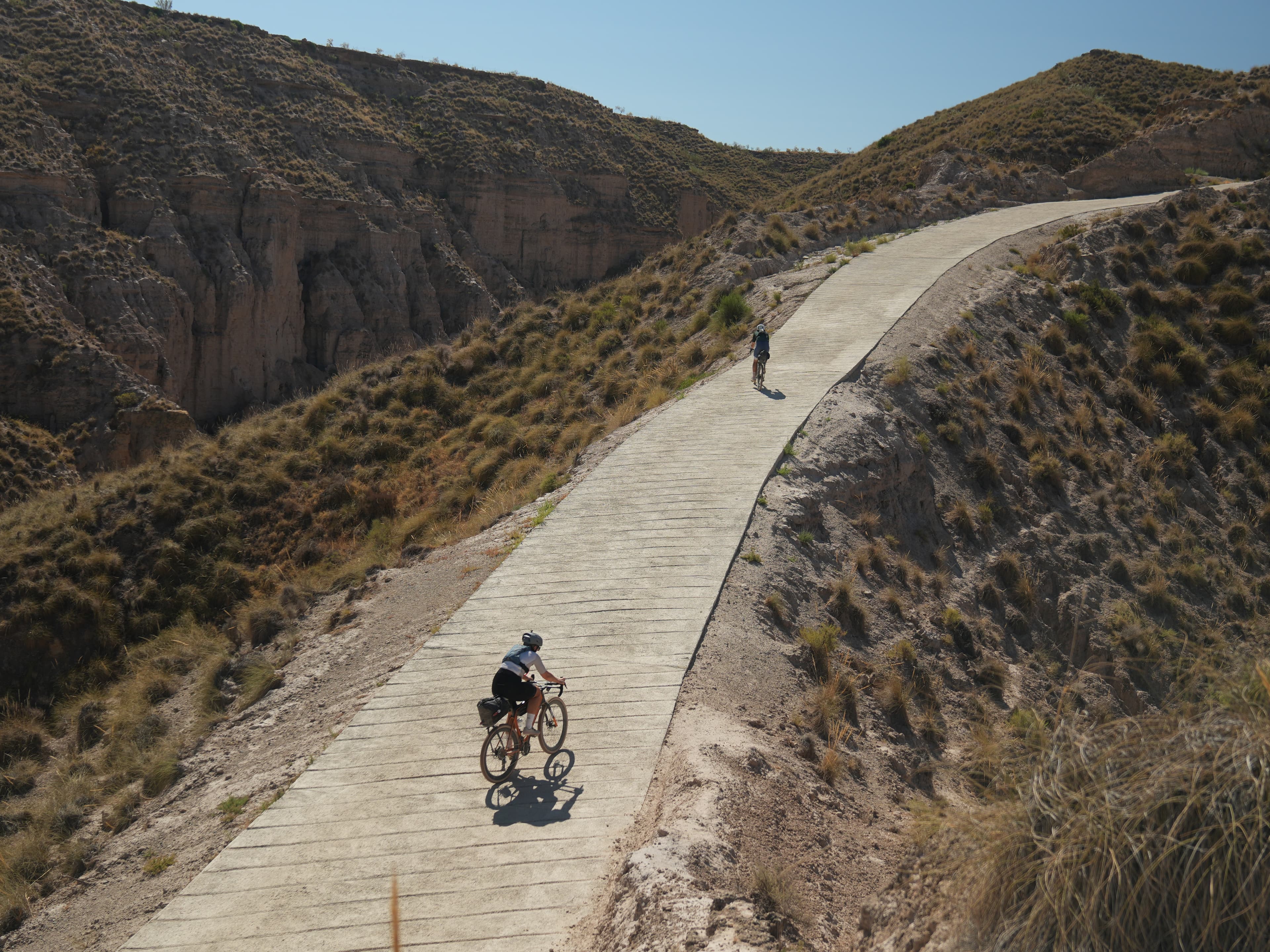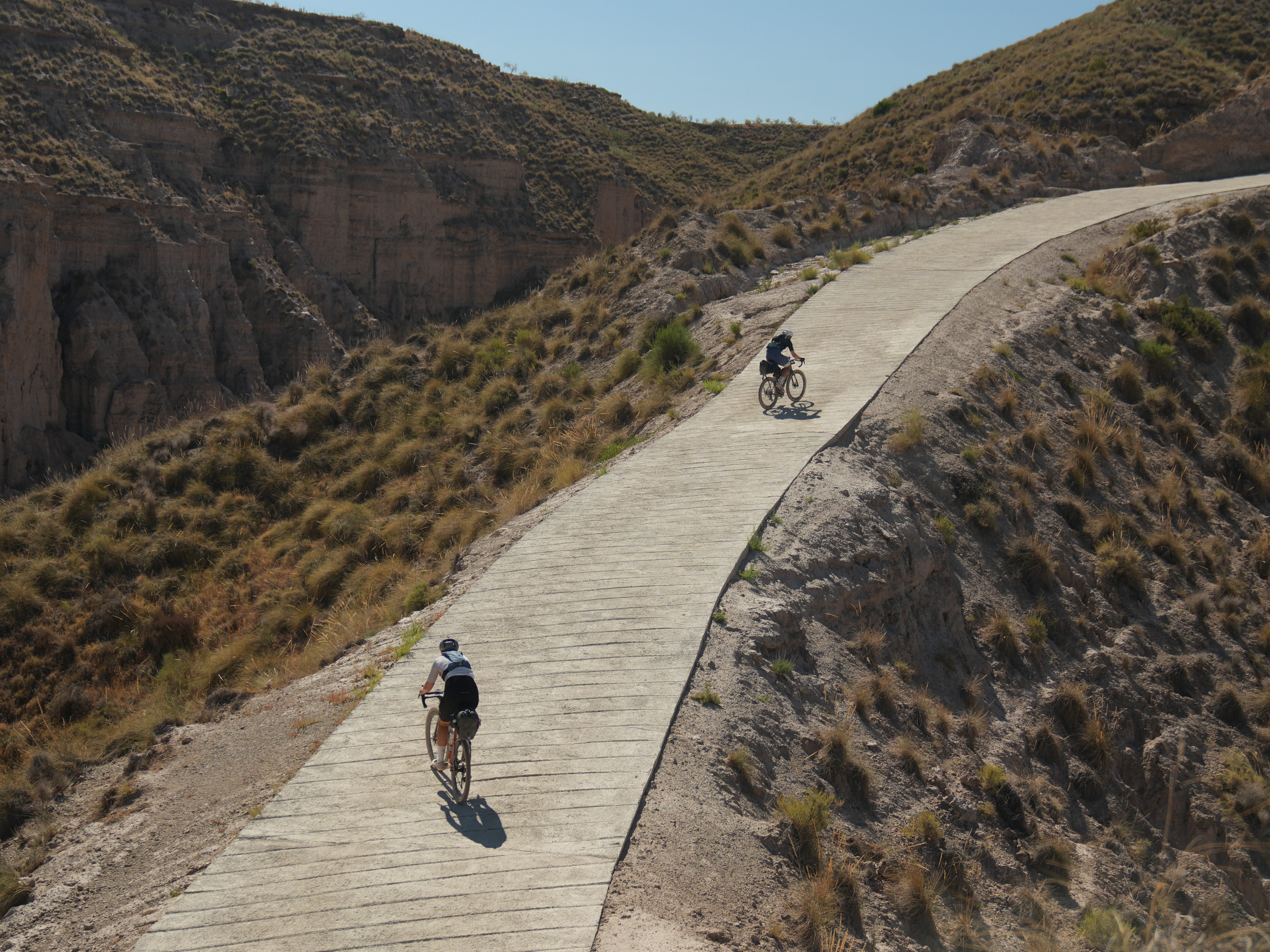
On the flat, absolute power is what matters. A rider putting out 300 watts will go faster than a rider putting out 250 watts, regardless of body weight. But the moment the road tilts up, everything changes.
On a climb, it's watts per kilogram that determines who gets to the top first. This is your power-to-weight ratio — the single most important number in cycling performance on any terrain that goes uphill.
How to Calculate Your W/kg
The calculation is simple: divide your FTP (in watts) by your body weight (in kilograms).
W/kg = FTP ÷ Body Weight
A 75kg rider with an FTP of 260W has a power-to-weight of 3.47 W/kg.
What's a Good Power-to-Weight Ratio?
| W/kg | Level | What This Means | |---|---|---| | 1.5-2.5 | Recreational | Casual cyclist, comfortable on flat terrain | | 2.5-3.0 | Fitness cyclist | Can complete sportives, comfortable in groups | | 3.0-3.5 | Competitive amateur | Holding your own in club races, strong on climbs | | 3.5-4.0 | Strong amateur | Competitive in Cat 3-4 racing, strong sportive performer | | 4.0-4.5 | Elite amateur | Competitive at national level, top 10% of serious cyclists | | 4.5-5.0 | Semi-pro | Domestique-level in professional racing | | 5.0-6.0 | Professional | World Tour level | | 6.0+ | Elite professional | Grand Tour contender, climbing specialist |
These are based on 20-minute or 60-minute sustainable power. Your actual climbing speed also depends on aerodynamics, gradient, rolling resistance, and drafting — but W/kg is the dominant factor on any sustained climb over 5 minutes.
The Two Levers: Power Up or Weight Down?
There are only two ways to improve your W/kg ratio: increase the numerator (power) or decrease the denominator (weight). The question is which one to focus on.
Focus on power if:
- Your body fat percentage is already below 12% (men) or 18% (women)
- You're relatively new to structured training (first 2-3 years)
- You're losing power when you diet
- Your body weight is already in a healthy range for your height
Focus on weight if:
- Your body fat percentage is above 15% (men) or 22% (women)
- You've been training consistently for 3+ years and power is plateauing
- You're carrying excess weight that's not serving your performance
- You can make body composition changes through better nutrition without restricting calories
Focus on both simultaneously if:
- You follow the "fuel for the work required" framework — this naturally reduces weight while maintaining or increasing power
- You're in the early months of returning to cycling
The Fastest Path
For most amateur cyclists (3.0-4.0 W/kg), the fastest path to improvement is usually the weight side — not through restriction, but through better nutrition. The fuel for the work required approach that I used to go from 86kg to 79kg while maintaining power produced a W/kg improvement of roughly 0.4 in 12 weeks.
That same 0.4 W/kg improvement through power alone would require adding roughly 30 watts to FTP — which might take 6-12 months of focused training.
Key Takeaways
- Power-to-weight ratio (W/kg) is the most important number for climbing performance
- Calculate: FTP ÷ body weight in kg
- 3.0-3.5 W/kg = competitive amateur, 4.0+ = elite amateur, 5.0+ = professional
- Most amateurs improve faster through body composition than power gains
- Use the fuel for the work required framework — it improves both sides simultaneously
- Don't sacrifice power for weight — if FTP drops when you diet, you're doing it wrong
- Use our FTP Zone Calculator and Race Weight Calculator together
- To improve the power side, read how to improve FTP
- To improve the weight side, read the fuel for the work required framework
- For climbing-specific tips, see 5 reasons you're getting dropped on climbs
- Our body composition guide explains why the scale isn't the full picture